
Tornadoes are common in the Midwest, and the St. Louis area is especially vulnerable. These violently rotating columns of air can reach speeds over 200 mph, carving paths more than a mile wide and several miles long. Even with improved warning systems, it’s critical to know how to respond immediately when a tornado warning is issued.
How to Prepare Before a Tornado Happens
Know the Difference Between Watches and Warnings
- Tornado Watch – Conditions are favorable for tornadoes to form. Stay alert and be ready to act.
- Tornado Warning – A tornado has been spotted or indicated by radar. Take shelter immediately in your Severe Weather Refuge Area (SWRA).
- Destructive Thunderstorm Warning – A severe storm is expected to produce winds over 80 mph and/or baseball-sized hail. Treat it like a tornado warning and shelter in your SWRA.
Know Your Severe Weather Refuge Area (SWRA)
A SWRA is a designated safe location inside a building that offers the greatest protection during severe weather events such as tornadoes or destructive winds.
Why it’s important to know your SWRA:
- Provides maximum protection from wind, flying debris, and structural damage.
- Saves critical seconds—you can get to safety immediately when a warning is issued.
📍 Tip: Building maps, posted near exits and elevator lobbies, show SWRA locations.
What To Do When It Happens
- Go to your designated Severe Weather Refuge Area immediately.
- Do not use elevators. Use stairs if needed.
- Stay sheltered until the warning expires and an all-clear is given by emergency officials.
What To Do Right After It Happens
- Check for injuries and provide first aid if trained to do so.
- Report hazards or damage to campus security by calling WUPD 314-935-5555 or Protective Services 314-362-4357.
- Exit the building when it is safe and appropriate.
- Follow instructions from emergency personnel and stay informed through the WashU Safe App or official university communications.
Understand What Outdoor Warning Sirens Mean
Outdoor sirens are designed to alert people outside—not inside buildings.
- Activated during tornado warnings or destructive thunderstorm warnings in St. Louis City or County.
- Although, it may not indicate a direct threat to WashU, you should still check alerts and be ready to act.
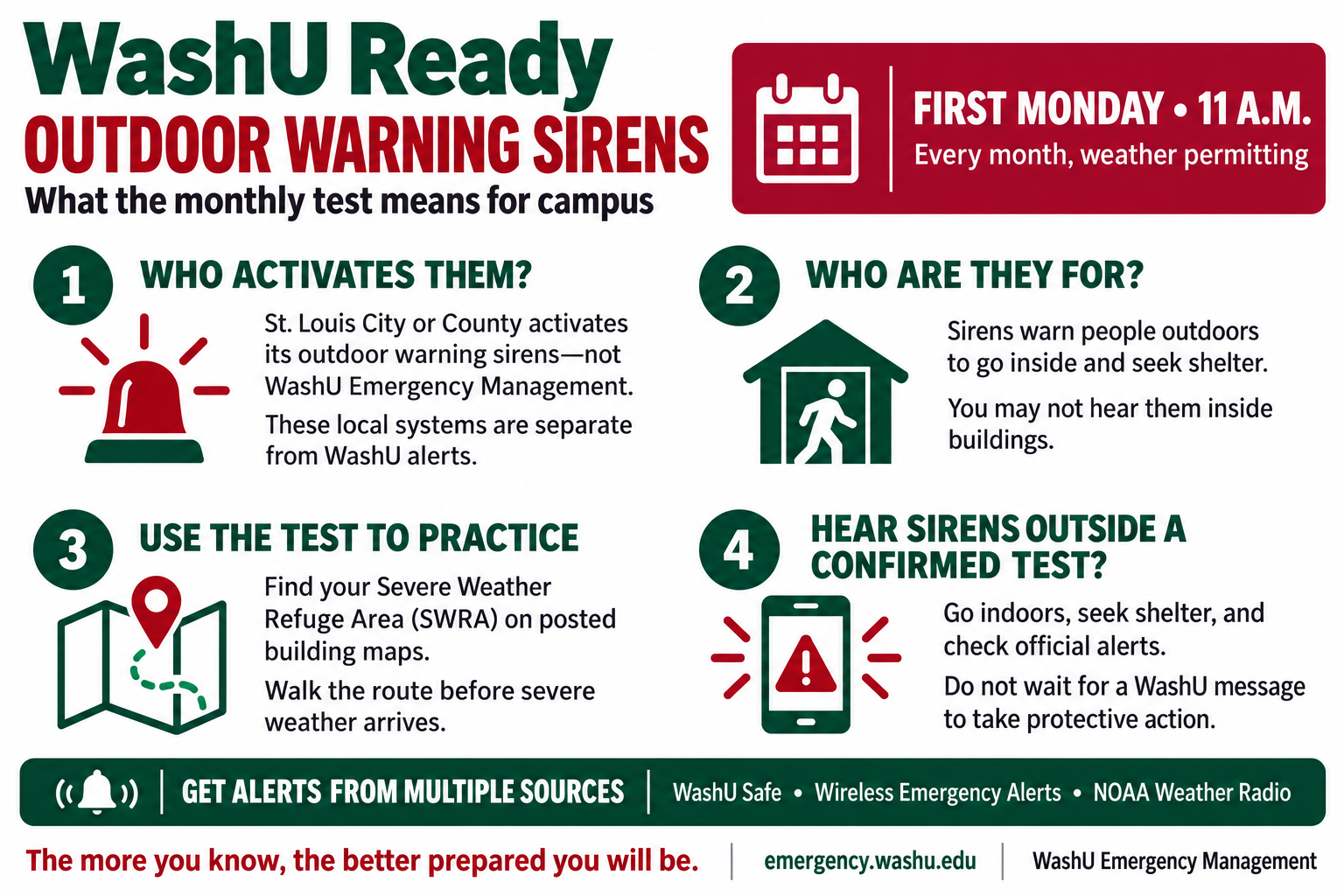
Get Alerts from Multiple Sources
- WashU Safe App – Instant emergency notifications from the university.
- NOAA Weather Radio – Official alerts directly from the National Weather Service.
- TV and Local News Apps – Live coverage and updates.
- Wireless Emergency Alerts (WEA) – Government alerts sent to your mobile device.
📍Tip: Use Wi-Fi for Reliable Alerts –The WashU Safe App is useful in buildings with strong Wi-Fi but limited cell service. If a text message is delayed, the app ensures you still receive essential emergency notifications right away.