

Together,
we are WashU Ready!
UPDATES

Tornado Watch Issued

Posted April 17, 2026 at 3:41 pm

The National Weather Service Storm Prediction Center has issued Tornado Watch for portions of Missouri, including St. Louis City, St. Louis County, and St. Charles County, through 11:00 PM CDT tonight (Friday, April 17).

A Tornado Watch means conditions are favorable for the development of tornadoes and severe thunderstorms in and around the watch area.

What you should do now:

  • Stay informed: Monitor weather updates through trusted sources and enable notifications on the WashU Safe App
  • Identify your SWRA: Know the nearest interior room on the lowest level of your building, away from windows
  • Be prepared to act: If a Tornado Warning is issued, move to your safe place immediately
  • Review your plan: Take a moment to ensure you know how to respond if conditions worsen

WashU Emergency Management will continue to monitor conditions and share updates as needed.

Thurtene Carnival

As you head to campus, take a moment to prepare and stay informed.

Tune In: Download the WashU Safe App and enable notifications to receive important updates and alerts during the event.

Learn More: Review event details, including times and any campus closures, before you go. Visit emergency.washu.edu for the latest preparedness information.

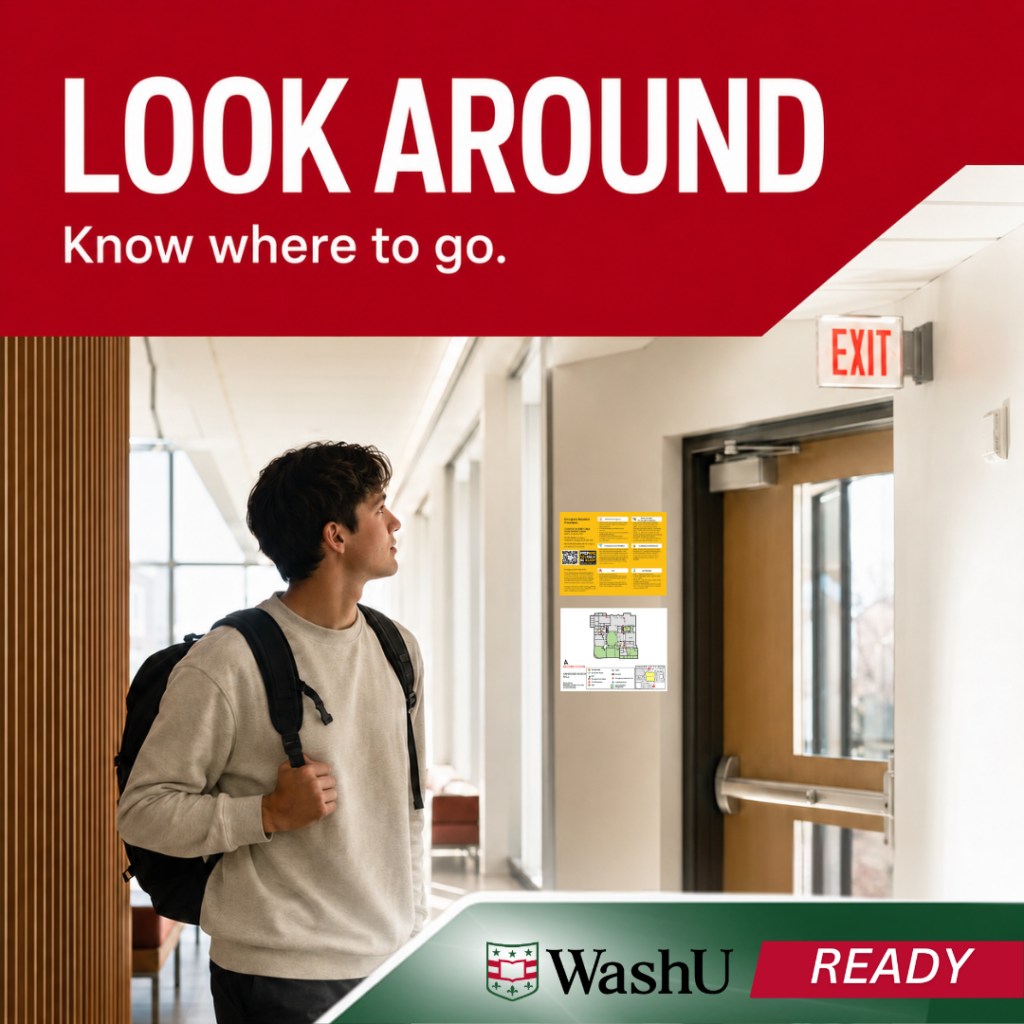
Look Around: Stay aware of your surroundings and follow guidance from event staff and public safety officials.

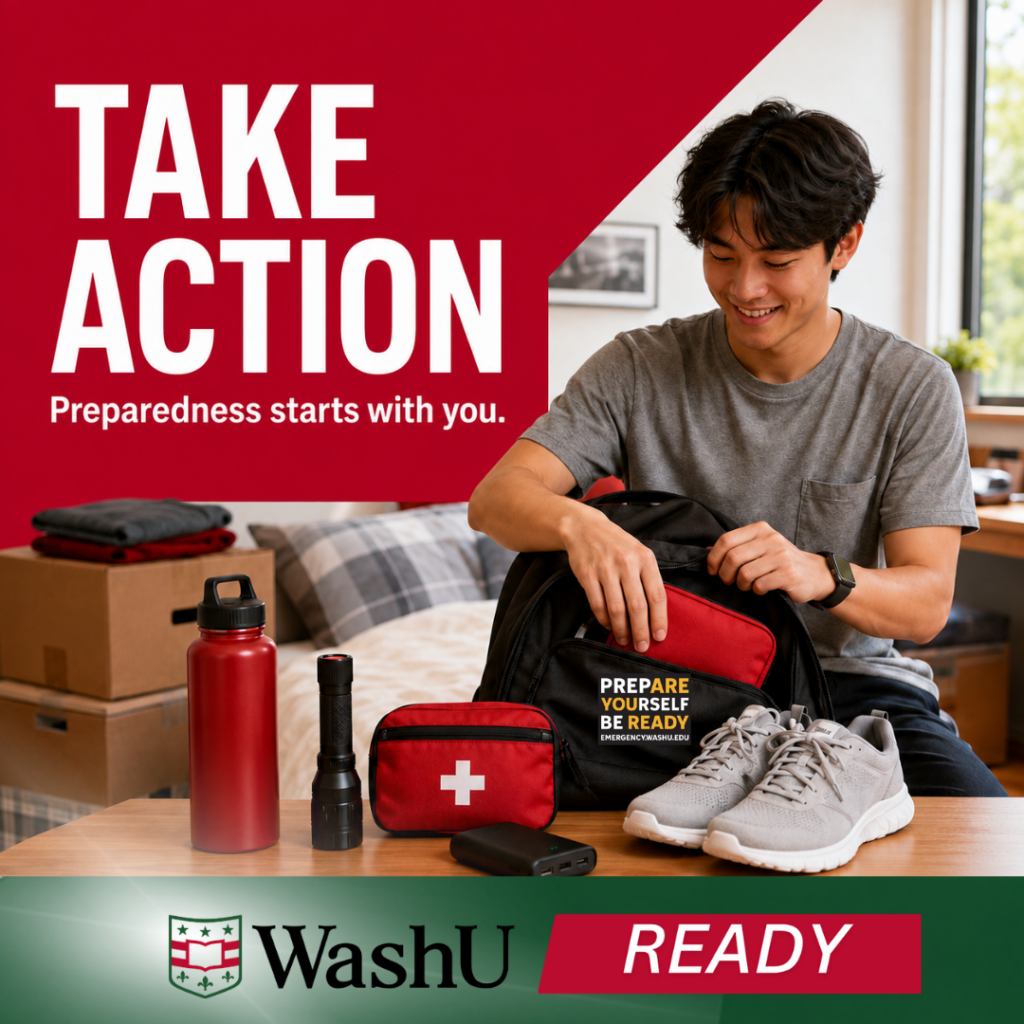
Take Action: If an emergency occurs, know where to go and what to do. Follow official instructions and use the WashU Safe App for real-time updates.

Together, we are WashU Ready.

#SafePlaceSelfie: Know Where To Go

Severe weather can happen quickly. Knowing where to go before it happens is one of the most important steps you can take to stay safe.

The #SafePlaceSelfie campaign is designed to help you identify Severe Weather Refuge Areas (SWRAs) in the spaces where you learn, work, and live. These areas—typically interior rooms, lower levels, or designated shelter spaces—are identified to provide protection during severe weather events such as tornadoes or damaging winds.

Why it matters
During a severe weather warning, seconds matter. Taking time now to locate your safe place helps reduce uncertainty and allows you to act quickly and confidently when it counts.

What you should do

  • Identify the Severe Weather Refuge Area in your building
  • Take note of how to quickly access that space
  • Snap a #SafePlaceSelfie to reinforce your awareness and share with others

Not on campus? It still applies.
Preparedness doesn’t stop when you leave campus. If you are working or studying from home, take a moment to identify your safest location—such as a basement or an interior room away from windows—and make a plan.

Preparedness starts with awareness. Awareness leads to action.

Together, we are WashU Ready.

Be Ready for Tornadoes and Severe Thunderstorms

Preparedness is a shared responsibility. Understand the RiskS.

Severe weather in the St. Louis region can develop quickly. WashU Emergency Management wants you to be prepared and know how to act when tornadoes or destructive thunderstorms are in the forecast.

News for now

Resources for WashU Employees

WashU employees and their household members can find emotional resources and support following the Feb. 24 incident on the Danforth Campus.

WashU Safe app

The university safety app, WashU Safe, offers enhanced features such as Friend Walk, Mobile Bluelight, safety notifications, access to emergency procedures and MORE!

Follow us on social media!

WashU Emergency Management has LinkedInFacebookXYouTube, and Instagram accounts! Be sure to follow us @WashUReady for news and preparedness tips.

EPC and KMC program information

The Emergency Preparedness Coordinator (EPC) and Key Management Contact (KMC) program is a university-wide initiative, designed to help each department or school prepare to respond to emergencies on campus. Department managers should designate an EPC and KMC, who will attend trainings on how to assist with immediate response actions during an emergency.

Training

The focus of the Emergency Management Training Program is to provide appropriate and relevant training courses to personnel that may have roles and responsibilities in a disaster event.